
Wiki Cluster
Ores List & Locations
Use this page to understand where ores come from and how to browse full lists safely—then jump straight to Snowite (Frostspire) when you’re ready.
Fast Navigation
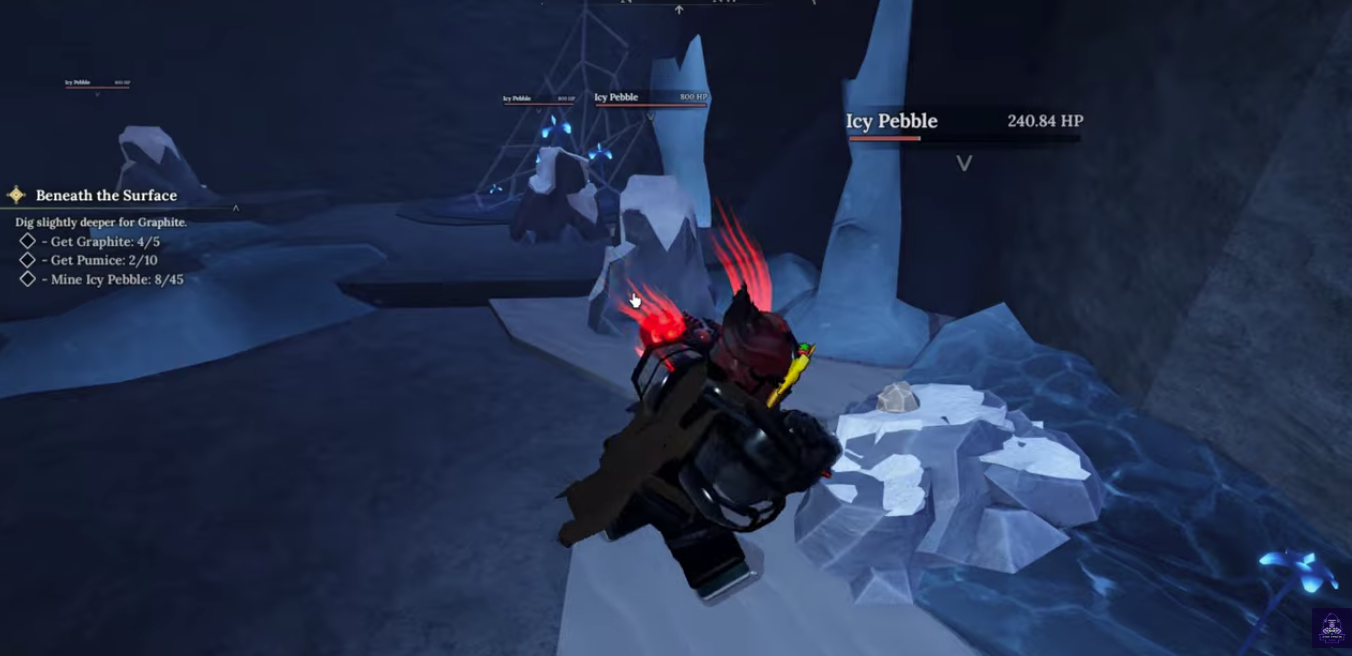
Icy Pebble / Frostspire Node Example
How Ore Lists Work (So You Don’t Get Misled)
Most ore guides present the same core fields: where it drops (zone + node type), how rare it is (chance), and utility fields (multiplier/price). That’s useful for planning farming sessions and deciding what’s worth forging.
Because The Forge is actively updated, treat any “complete list” as time-sensitive. Use lists for navigation and planning—then validate in-game when you’re about to commit resources.
A good ore list helps you answer three questions fast: (1) which region should I be in, (2) which node types should I prioritize, and (3) what’s the payoff if I get the drop. If a guide doesn’t clearly tell you region + node type, it’s usually not actionable.
You’ll see two kinds of location info in the wild: wiki-style pages that list ore entries and zones, and guide-style pages that compile drop chances, multipliers, and farming notes. Use wiki pages for authoritative naming and zone navigation; use guide pages for quick planning; use your own in-game UI for final confirmation.
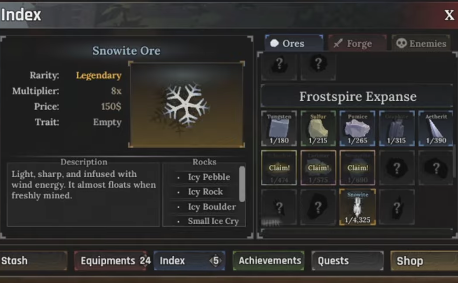
Index UI Snapshot (Why Node Types Matter)
The Vocabulary You’ll See (And What It Means)
Region / Zone: the world area you’re in (for this cluster, Frostspire Expanse is the key region). If you’re in the wrong region, you can’t roll the drop no matter how long you mine.
Node type: the rock/crystal family you’re breaking (examples often include Icy Pebble, Icy Rock, Icy Boulder, and ice crystal sizes). Many ores are restricted to specific node families inside the same region.
Drop chance: the probability per node break. For rare ores like Snowite, drop chance is the main reason guides exist—because the grind is a planning problem.
Multiplier and price: economy fields used in many ore tables. They help you decide whether an ore is primarily a crafting ingredient, a money maker, or both.
How to Use This Page (A Practical Workflow)
Step 1: choose your target. If your target is Snowite, go to the Snowite core page first and learn the trait and the farming route.
Step 2: confirm region + node types. Don’t assume “ice region = correct”; confirm which node families you should prioritize so you aren’t wasting breaks on the wrong rocks.
Step 3: set expectations. A low drop chance means you should plan your session length and route efficiency. If you only have a short play window, prioritize throughput upgrades or higher-probability goals instead of chasing a long-tail drop.
Step 4: after you get the ore, switch from “location thinking” to “value thinking”. That’s where the Traits & Tier List page becomes the right next click.
Frostspire Highlight (Quick Reference)
| Ore | Rarity | Where | Notable Value | Next |
|---|---|---|---|---|
| Snowite | Legendary | Frostspire Expanse (icy rock/crystal nodes) | Weapon-only slow trait; ~8× multiplier; extremely rare | Read the Snowite wiki page → /roblox-games/the-forge/snowite/ |
Cross-Link: List → Tier List
A locations list answers “where”. The next question is always “which one is worth it?”. Use the Tier List page to compare traits and pick ores based on your goal (control, damage, farming value).